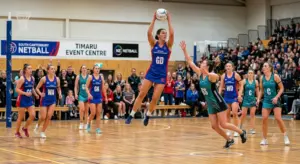
The rivalry between the Silver Ferns and the Australian Diamonds is the most storied and intense matchup in world netball, defined by decades of one-goal thrillers and tactical psychological warfare. Since their first meeting in 1938, these two nations have contested almost every major international final, including the Netball World Cup and the Commonwealth Games. This article explores the historical origins of this trans-Tasman battle, the significance of the Constellation Cup, and the tactical evolution that sees the "Kiwi style" of zonal defense clash with the "Aussie style" of relentless man-on-man pressure. We provide a comprehensive breakdown of head-to-head statistics, the impact of legendary coaches like Dame Noeline Taurua and Stacey Marinkovich, and a detailed look at the historic 2024 and 2025 series that reshaped the modern game. For any netball enthusiast, the Silver Ferns vs Australia represents the absolute pinnacle of high-performance sport.
The Genesis of the Trans-Tasman Battle
The rivalry began on a grassy court in Melbourne in 1938, where the New Zealand national team (then playing a nine-a-side version of "women's basketball") faced Australia for the first time. The transition to the seven-a-side game was difficult for the Kiwis, who lost the inaugural test 40–11. However, this match planted the seeds for a competitive fire that has never been extinguished. Over the next century, the two nations worked together to standardize the rules of netball, yet remained fierce enemies on the court. The rivalry is built on a foundation of mutual respect and geographical proximity, often referred to as a "sibling rivalry" where neither side is willing to give an inch.
- First Meeting: 1938 in Melbourne, Australia.
- First NZ Win: 1967 World Championships in Perth.
- Core Philosophy: New Zealand’s deceptive space vs Australia’s physical tagging.
- Match Frequency: The teams typically meet 4–6 times per year in various series.
First Meeting: 1938 in Melbourne, Australia.
First NZ Win: 1967 World Championships in Perth.
Core Philosophy: New Zealand’s deceptive space vs Australia’s physical tagging.
Match Frequency: The teams typically meet 4–6 times per year in various series.
| Milestone | Year | Result | Significance |
|---|---|---|---|
| Inaugural Test | 1938 | Australia 40–11 NZ | First international encounter |
| First World Cup Final | 1963 | Australia 37–36 NZ | Established the “one-goal” trend |
| Historic Gold | 1967 | NZ 40–34 Australia | First major title for the Silver Ferns |
| The “Wall” Era | 2019 | NZ 52–51 Australia | 2019 World Cup Final glory |
The "One-Goal" Phenomenon
Statistically, more matches between the Silver Ferns and Australia have been decided by a single goal than any other international pairing. This trend began in the 1963 World Tournament and reached its peak in the late 1990s and 2000s, where extra-time thrillers became the expected norm for fans.
The Constellation Cup: A Symbol of Supremacy
Introduced in 2010, the Constellation Cup is the perpetual trophy contested annually between the Silver Ferns and the Australian Diamonds. The trophy itself is a masterpiece of craftsmanship, forged from sterling silver to represent New Zealand and encrusted with 101 diamonds for Australia. For over a decade, Australia dominated the series, winning seven successive titles between 2013 and 2019. However, the tide began to turn in 2021 when the Silver Ferns claimed the cup for the first time in nine years. The Constellation Cup is more than just a trophy; it is a test of endurance, often played across four matches in two weeks, requiring elite recovery and tactical adjustments.
- Trophy Composition: Silver cup with 101 diamonds (3.38 carats).
- Most Successful Team: Australia (11 titles).
- New Zealand Titles: 2012, 2021, 2024.
- Series Format: Currently a four-match series (2 in NZ, 2 in Australia).
Trophy Composition: Silver cup with 101 diamonds (3.38 carats).
Most Successful Team: Australia (11 titles).
New Zealand Titles: 2012, 2021, 2024.
Series Format: Currently a four-match series (2 in NZ, 2 in Australia).
| Year | Winner | Score (Games) | Captain (NZ) |
|---|---|---|---|
| 2021 | New Zealand | 3–1 | Ameliaranne Ekenasio |
| 2022 | Australia | 2–2 (Goal % win) | Liz Watson (AUS) |
| 2023 | Australia | 2–2 (Goal % win) | Ameliaranne Ekenasio |
| 2024 | New Zealand | 3–1 | Ameliaranne Ekenasio |
The Goal Percentage Rule
Until 2024, a tied series (2–2) was decided by goal percentage across the four matches. This rule often favored Australia's high-volume scoring, leading to New Zealand losing the trophy despite winning two games in the series. This changed in 2025 with the introduction of "Series Decider Time."
World Cup Clashes: High Stakes and Heartbreak
The Netball World Cup is the ultimate stage for the trans-Tasman rivalry. Australia and New Zealand have met in the final of almost every World Cup since the tournament's inception. The 1999 final in Christchurch remains one of the most painful memories for Kiwi fans, as Sharelle McMahon scored in the final seconds to steal the gold. Conversely, the 2019 World Cup in Liverpool provided New Zealand with its greatest modern triumph, as the Silver Ferns defeated the Diamonds 52–51 to become world champions. These matches are characterized by extreme pressure, where stars like Irene van Dyk and Catherine Cox have etched their names into sporting folklore.
- World Cup Record: Australia holds more titles, but NZ is the most frequent challenger.
- Psychological Warfare: Use of bench rotations to disrupt shooting rhythm.
- Defensive Intersections: The 2019 final saw NZ's "Jane Watson/Casey Kopua" duo neutralize Australia's shooters.
- Historical Impact: World Cup results determine national funding and popularity of the sport.
World Cup Record: Australia holds more titles, but NZ is the most frequent challenger.
Psychological Warfare: Use of bench rotations to disrupt shooting rhythm.
Defensive Intersections: The 2019 final saw NZ's "Jane Watson/Casey Kopua" duo neutralize Australia's shooters.
Historical Impact: World Cup results determine national funding and popularity of the sport.
| World Cup Year | Final Score | Winner | Key Performer |
|---|---|---|---|
| 1999 | Australia 42–41 NZ | Australia | Sharelle McMahon |
| 2003 | NZ 49–47 Australia | New Zealand | Irene van Dyk |
| 2011 | Australia 58–57 NZ | Australia | Caitlin Bassett |
| 2019 | NZ 52–51 Australia | New Zealand | Casey Kopua |
The "Kiwi Style" Zonal Defense
At the World Cup level, New Zealand pioneered the "zonal" or "area" defense. Instead of chasing their opponents (man-on-man), the Silver Ferns block passing lanes as a unit. This tactic is specifically designed to slow down the lightning-fast ball movement of the Australian midcourt. Read more in Wikipedia.
Commonwealth Games: Extra Time and Epic Golds
Netball at the Commonwealth Games has provided some of the most dramatic moments in trans-Tasman history. The 2010 Delhi Games final is widely considered the greatest netball match ever played. After 84 minutes of play and double extra time, Maria Folau (then Tutaia) scored the winning goal to give New Zealand the gold medal. The rivalry at the Commonwealth Games is unique because it takes place within a multi-sport village environment, adding extra layers of national pride and pressure. While Australia leads the overall gold medal count, New Zealand’s ability to win "clutch" games in extra time has become a hallmark of their Commonwealth legacy.
- Inclusion: Netball became an official sport in 1998.
- Gold Medals (NZ): 2006, 2010.
- Gold Medals (AUS): 1998, 2002, 2014, 2022.
- Extra Time Records: NZ has won more double-extra-time finals against Australia.
Inclusion: Netball became an official sport in 1998.
Gold Medals (NZ): 2006, 2010.
Gold Medals (AUS): 1998, 2002, 2014, 2022.
Extra Time Records: NZ has won more double-extra-time finals against Australia.
| Games | Final Result | Medal | Format |
|---|---|---|---|
| 2002 Manchester | Australia 57–55 NZ | Silver | Double Extra Time |
| 2010 Delhi | NZ 66–64 Australia | Gold | Double Extra Time |
| 2014 Glasgow | Australia 58–40 NZ | Silver | Clinical Aus Win |
| 2022 Birmingham | Australia 54–44 NZ | Bronze (NZ) | (SF Semi-final loss) |
The 84-Minute Epic
The Delhi 2010 final lasted so long that it delayed the closing ceremony of the Games. It showcased the extreme aerobic fitness required of modern netballers, with players like Casey Kopua and Laura Langman playing every single minute of the marathon match.
Tactical Evolution: Zonal vs Man-on-Man
The fundamental difference between the Silver Ferns and Australia lies in their defensive philosophies. Australia traditionally employs a "man-on-man" (or one-on-one) style, where defenders shadow their opponents relentlessly, aiming to induce physical fatigue and errors. New Zealand, conversely, utilizes a "zonal" system, focusing on space and intersections. In recent years, under Noeline Taurua, the Silver Ferns evolved this into a "hybrid" defense, which switches between man-to-man and zone depending on the ball's position. This tactical "chess match" is why these games are so fascinating to analysts; a single adjustment by a coach can change the momentum of an entire series.
- Australia’s Style: High pressure, physical, high-volume shots, rapid transition.
- New Zealand’s Style: Tactical, short-pass game, deceptive movement, zonal intercepts.
- Midcourt Battle: The duel between the Wing Attack (WA) and Wing Defense (WD) is often where matches are won.
- The "Wall": New Zealand’s defensive structure that prevents long-range feeds into the circle.
Australia’s Style: High pressure, physical, high-volume shots, rapid transition.
New Zealand’s Style: Tactical, short-pass game, deceptive movement, zonal intercepts.
Midcourt Battle: The duel between the Wing Attack (WA) and Wing Defense (WD) is often where matches are won.
The "Wall": New Zealand’s defensive structure that prevents long-range feeds into the circle.
| Tactic | New Zealand Focus | Australia Focus |
|---|---|---|
| Defense | Intercepting lanes (Zone) | Forcing errors (Man-on-Man) |
| Attack | Short passing & triangles | Long-range feeds & speed |
| Shooting | Movement & screens | Holding the post & volume |
Countering the "Aussie Bomb"
Australia is famous for the "long bomb"—a high-velocity pass from the midcourt directly to the shooter under the post. The Silver Ferns counter this by having their Goal Defense (GD) and Goal Keep (GK) work in tandem to "sandwich" the shooter, making the long pass a high-risk option.
The 2024 Constellation Cup: A Kiwi Triple Threat
The 2024 Constellation Cup marked a significant shift in the rivalry. After losing a series to England earlier in the year, the Silver Ferns entered the series as underdogs. However, they stunned the world by winning the first three tests in a row (64–50, 63–52, and 61–43), securing the trophy with a game to spare. This was the first time in history that a New Zealand team had won three consecutive matches by double-digit margins against a full-strength Australian side. Grace Nweke’s dominance in the circle and Karin Burger’s relentless defensive pressure were the catalysts for this historic "triple threat" victory.
- Result: New Zealand won 3–1.
- History Made: First time NZ won three consecutive tests by 10+ goals.
- Star Performer: Grace Nweke (Scored 50+ goals in multiple tests).
- Tactical Win: NZ neutralized Liz Watson’s midcourt influence.
Result: New Zealand won 3–1.
History Made: First time NZ won three consecutive tests by 10+ goals.
Star Performer: Grace Nweke (Scored 50+ goals in multiple tests).
Tactical Win: NZ neutralized Liz Watson’s midcourt influence.
| Test | Location | Score | Result |
|---|---|---|---|
| Test 1 | Wellington | 64–50 | NZ Win |
| Test 2 | Auckland | 63–52 | NZ Win |
| Test 3 | Perth | 61–43 | NZ Win |
| Test 4 | Melbourne | 50–63 | Australia Win |
The Perth Breakthrough
Winning the third test in Perth was statistically significant. It was the first time New Zealand had won a series on Australian soil since the inception of the Constellation Cup, silencing critics who suggested the Silver Ferns could only win at home.
2025: The Rise of "Series Decider Time"
Following the 2024 results, 2025 introduced a groundbreaking rule change: the "Series Decider." If the four-match series ended 2–2, teams would play a separate, standalone "mini-game" of two 7-minute halves to determine the winner. The 2025 series was arguably the most dramatic in history. Australia won the opening two tests comfortably (69–52 and 66–54), but New Zealand roared back in the home leg, winning Test 3 and Test 4 (62–57) to force the series into the first-ever Series Decider. In a heart-stopping 14 minutes, Australia eventually prevailed 12–11 to reclaim the cup, but only after a final-second defensive play from Sunday Aryang.
- Series Score: 2–2 (Australia wins Decider 12–11).
- Highest Score: 69 goals by Australia in Test 1 (New record vs NZ).
- Injury Impact: Sunday Aryang (AUS) suffered a serious injury in the final second of the decider.
- Interim Coaching: Yvette McCausland-Durie led NZ following Taurua’s departure.
Series Score: 2–2 (Australia wins Decider 12–11).
Highest Score: 69 goals by Australia in Test 1 (New record vs NZ).
Injury Impact: Sunday Aryang (AUS) suffered a serious injury in the final second of the decider.
Interim Coaching: Yvette McCausland-Durie led NZ following Taurua’s departure.
| Component | Test 3 & 4 (NZ) | Series Decider (Extra Time) |
|---|---|---|
| Atmosphere | Sold out Wolfbrook Arena | High-tension “Mini-Match” |
| Top Scorer | Grace Nweke (56 goals) | Sophie Garbin (Clutch goals) |
| Outcome | NZ won to force decider | Australia reclaimed the cup |
The "Decider" Logistics
The Series Decider was played immediately after the conclusion of Test 4. Players had just 12 minutes to recover before returning to a 0–0 scoreline. This tested the "depth" of the squads, with New Zealand losing Maddy Gordon to cramp in the final minutes.
Coaching Legends: Taurua vs Marinkovich
The modern rivalry has been defined by the tactical battle between Dame Noeline Taurua (NZ) and Stacey Marinkovich (AUS). Taurua is a visionary who emphasizes "mana" and cultural identity, while Marinkovich is a clinical analyst focused on technical perfection and connection. The departure of Taurua in early 2025 left a massive void in New Zealand netball, with Yvette McCausland-Durie stepping in as interim. The contrast in their styles—Taurua’s "gut-instinct" changes vs Marinkovich’s "pre-planned" structures—is a recurring theme in post-match analysis.
- Taurua’s Legacy: 2019 World Cup Gold and 2024 Constellation Cup.
- Marinkovich’s Legacy: Reclaimed World #1 ranking and 2023 World Cup Gold.
- Succession: New Zealand’s search for a permanent successor to Taurua in 2026.
- Strategic Timeout: Both coaches are masters at using the tactical timeout to break an opponent's momentum.
Taurua’s Legacy: 2019 World Cup Gold and 2024 Constellation Cup.
Marinkovich’s Legacy: Reclaimed World #1 ranking and 2023 World Cup Gold.
Succession: New Zealand’s search for a permanent successor to Taurua in 2026.
Strategic Timeout: Both coaches are masters at using the tactical timeout to break an opponent's momentum.
| Coach | Wins (vs each other) | Primary Philosophy |
|---|---|---|
| Noeline Taurua | High % in Major Finals | Holistic & Mana-based |
| Stacey Marinkovich | High % in Series | Data-driven & Connection |
The "Timeout" Chess Match
In the 2025 series, Marinkovich famously used a timeout when NZ had scored five goals in a row. The timeout allowed Australia to reset their defensive structure, illustrating how coaches now influence the game as much as the players on the court.
Key Player Matchups: Nweke vs Bruce
The current era of the rivalry is centered on the battle between New Zealand shooter Grace Nweke and Australian defender Courtney Bruce. Nweke, standing at 1.93m, is a traditional "holding" shooter with unmatched strength. Bruce is a versatile, aggressive defender who uses her agility and "verbal pressure" to disrupt shooters. When Nweke is on form, she is almost unguardable, as seen in the 2024 series. However, Bruce’s ability to win "garbage ball" and rebounds in the fourth quarter has often been the difference for the Diamonds.
- Grace Nweke (NZ): The most dominant GS in world netball.
- Courtney Bruce (AUS): The most disruptive GK/GD in the game.
- Liz Watson (AUS): The world’s best WA, the "engine" of the Diamonds.
- Karin Burger (NZ): The "tagger" who mirrors Watson’s every move.
Grace Nweke (NZ): The most dominant GS in world netball.
Courtney Bruce (AUS): The most disruptive GK/GD in the game.
Liz Watson (AUS): The world’s best WA, the "engine" of the Diamonds.
Karin Burger (NZ): The "tagger" who mirrors Watson’s every move.
| Matchup | Critical Skill | Predicted Winner |
|---|---|---|
| Nweke vs Bruce | Rebounding & Positioning | Split (Game dependent) |
| Watson vs Burger | Speed & Endurance | Burger (for defensive shut-down) |
| Gordon vs Moloney | Midcourt vision | Gordon (for explosive drive) |
The Midcourt Lockdown
While the shooters get the glory, the Silver Ferns' success often depends on Karin Burger’s ability to shut down Liz Watson. If Burger can limit Watson’s "center pass receives," the Australian attack loses its rhythm, forcing them into a slower, more uncomfortable game.
The Future: 2026 and Beyond
As we look toward the 2026 international season and the 2027 World Cup in Sydney, the rivalry is more balanced than it has been in decades. The introduction of the "Series Decider" and the rise of other nations like England means both Australia and New Zealand must innovate to stay at the top. For the Silver Ferns, the challenge is finding a permanent head coach who can build on Taurua’s legacy while integrating a new generation of midcourt talent. For Australia, the focus is on maintaining their world-ranked number-one status while facing an increasingly confident New Zealand side that no longer fears playing across the Tasman.
- 2026 Focus: NZ coaching search and Quad Series performance.
- 2027 World Cup: Sydney will be the ultimate "hostile" environment for the Ferns.
- Youth Integration: Developing "specialist" bench players for extra-time scenarios.
- Broadcasting: Moving to free-to-air will increase the "heat" of the rivalry.
2026 Focus: NZ coaching search and Quad Series performance.
2027 World Cup: Sydney will be the ultimate "hostile" environment for the Ferns.
Youth Integration: Developing "specialist" bench players for extra-time scenarios.
Broadcasting: Moving to free-to-air will increase the "heat" of the rivalry.
| Upcoming Event | Location | Rivalry Significance |
|---|---|---|
| 2026 Constellation Cup | NZ & AUS | Testing the new NZ permanent coach |
| 2027 World Cup | Sydney, AUS | The ultimate “Grudge Match” for Gold |
The "Sydney Cauldron"
The 2027 World Cup in Sydney is expected to break attendance records. For the Silver Ferns, winning on Australian soil in a World Cup final would be the ultimate achievement, surpassing even the glory of the 2019 Liverpool campaign.
Final Thoughts
The Silver Ferns vs Australia is the heartbeat of international netball. It is a rivalry defined by sweat, tears, and the smallest of margins. Whether it is a double-extra-time Commonwealth Games final or a 14-minute Series Decider, these two nations continue to push each other to the limits of human performance. As the tactical "chess match" evolves and new stars emerge, one thing remains constant: when the black dress meets the yellow dress, the world stops to watch. It is netball’s greatest show, and its legacy is the blueprint for excellence in women’s sport.
FAQ
Who has won more head-to-head matches between the Silver Ferns and Australia? Australia has historically won more matches and holds more World Cup and Constellation Cup titles.
What is the Constellation Cup? It is the annual trophy contested between New Zealand and Australia in a multi-match test series.
What happened in the 2025 Series Decider? After the four-match series ended 2–2, a 14-minute "mini-match" was played, which Australia won 12–11.
Who is the most successful Silver Ferns coach against Australia? Dame Noeline Taurua is widely considered the most successful in modern times, leading NZ to the 2019 World Cup and 2024 Constellation Cup.
Why is the rivalry so intense? Geographical proximity, a shared sporting history, and the fact that they have contested almost every major international final since 1963.
What is the "Kiwi style" of defense? New Zealand is famous for its "zonal" defense, which focuses on blocking passing lanes rather than individual players.
Who won the 2024 Constellation Cup? The Silver Ferns won the 2024 series 3–1, including a historic breakthrough win on Australian soil.
What is the difference between the World Cup and the Constellation Cup? The World Cup is a global tournament held every four years; the Constellation Cup is an annual bilateral series between just NZ and Australia.
Who is the current captain of the Silver Ferns? As of the most recent 2025 series, Karin Burger has taken on significant leadership after Ameliaranne Ekenasio stepped away.
Where will the next Netball World Cup be held? The 2027 Netball World Cup will be held in Sydney, Australia.