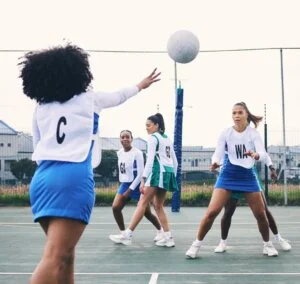
The Netball World Cup stands as the premier international competition in netball, held every four years to crown the world champion of the sport. Traditionally dominated by the intense rivalry between New Zealand and Australia, the tournament has evolved into a global spectacle featuring the top 16 nations across Africa, Europe, the Americas, and Oceania. This article explores the storied history of the event, the tactical shifts that have defined recent tournaments, the rigorous qualification processes, and the rising threat of nations like Jamaica and England. We provide a comprehensive analysis of the Silver Ferns' performance history, medal tallies for all participating nations, and a detailed look at the 2027 tournament preparations, offering fans and players a deep dive into the highest level of netball excellence.
The Origins and Legacy of World Netball Championships
The Netball World Cup, originally known as the World Tournament, was first held in 1963 in Eastbourne, England. This inaugural event featured 11 teams and set the stage for what would become a quadrennial tradition of sporting excellence. In those early years, the game was played outdoors on grass or asphalt, a far cry from the high-tech indoor arenas of the modern era. The tournament was rebranded to the Netball World Cup in 2015 to align with other global sporting properties. Throughout its history, the competition has been the primary vehicle for the development of international playing standards, forcing nations to innovate tactically and physically to compete with the dominant ANZ powers.
- First Tournament: 1963 in Eastbourne, England.
- Original Winners: Australia (New Zealand finished second).
- Frequency: Held every four years.
- Expansion: Grew from 11 teams in 1963 to a fixed 16-team format today.
- Renaming: Transitioned from "World Championships" to "World Cup" in 2015.
First Tournament: 1963 in Eastbourne, England.
Original Winners: Australia (New Zealand finished second).
Frequency: Held every four years.
Expansion: Grew from 11 teams in 1963 to a fixed 16-team format today.
Renaming: Transitioned from "World Championships" to "World Cup" in 2015.
| Year | Host City | Winner | Runner-Up |
|---|---|---|---|
| 1963 | Eastbourne | Australia | New Zealand |
| 1967 | Perth | New Zealand | Australia |
| 1971 | Kingston | Australia | New Zealand |
| 1975 | Auckland | Australia | England |
The Indoor Revolution
The transition from outdoor courts to indoor facilities in the 1980s fundamentally changed the speed of the World Cup. Without weather interference, teams could play a faster, more aerial game, which led to the development of the high-arching shots and long-range passes that characterize the modern international game.
New Zealand's Historic Relationship with the World Cup
For New Zealanders, the Netball World Cup is the ultimate measure of the Silver Ferns' success. The rivalry with the Australian Diamonds in the World Cup final is one of the most enduring and fierce in all of international sport. New Zealand has secured the title five times, with their most recent victory in 2019 being hailed as one of the greatest sporting "resurrections" in the country's history. The Silver Ferns' approach to the World Cup is often characterized by a blend of tactical intelligence, defensive tenacity, and the "Kiwi style" of short, sharp passing. Every four years, the nation stops to watch these athletes compete for the Infinitum Trophy, reflecting netball's status as a core part of New Zealand’s cultural identity.
- Total Titles: 5 (1967, 1979, 1987, 2003, 2019).
- Iconic Captains: Bernice Mene, Casey Kopua, Ameliaranne Ekenasio.
- Memorable Finals: The 1999 heartbreak (one-goal loss) and 2019 glory.
- Development: World Cup performance directly influences Netball NZ funding.
Total Titles: 5 (1967, 1979, 1987, 2003, 2019).
Iconic Captains: Bernice Mene, Casey Kopua, Ameliaranne Ekenasio.
Memorable Finals: The 1999 heartbreak (one-goal loss) and 2019 glory.
Development: World Cup performance directly influences Netball NZ funding.
| Achievement | Count | Years |
|---|---|---|
| Gold Medals | 5 | 1967, 1979*, 1987, 2003, 2019 |
| Silver Medals | 8 | 1963, 1971, 1975, 1991, 1995, 1999, 2007, 2011 |
| Bronze Medals | 2 | 2015, 1995 |
The 2019 Liverpool Masterclass
The 2019 campaign under coach Dame Noeline Taurua remains a benchmark. After a disastrous 2018 Commonwealth Games where the team failed to medal, Taurua led the Ferns to a world title in just 11 months, proving that cultural alignment and fitness standards are as vital as skill. Read more in Wikipedia.
The Global Power Shift: Rising Nations and New Challenges
While Australia and New Zealand have traditionally held a duopoly over the gold medal, the modern era has seen a dramatic shift in the global hierarchy. The "Big Two" are now a "Big Four," with England and Jamaica regularly defeating the traditional leaders in pool play and semi-finals. Jamaica’s "Sunshine Girls" bring an unmatched aerial presence and shooting accuracy, led by world-class shooters like Jhaniele Fowler. England’s "Vitality Roses" have invested heavily in professionalizing their league, resulting in a squad with immense depth and experience. This increased competition has made the Netball World Cup more unpredictable and commercially viable than ever before.
- Jamaica: Known for height and defensive rebounding dominance.
- England: Known for physical midcourt play and professional depth.
- South Africa: Rising African powerhouse with strong defensive structures.
- Malawi: The "Queens" are famous for their unique, deceptive style of play.
Jamaica: Known for height and defensive rebounding dominance.
England: Known for physical midcourt play and professional depth.
South Africa: Rising African powerhouse with strong defensive structures.
Malawi: The "Queens" are famous for their unique, deceptive style of play.
| Team | Top 4 Finishes (Since 2011) | Best Recent Result |
|---|---|---|
| England | 4 | Silver (2023) |
| Jamaica | 3 | Bronze (2023) |
| South Africa | 1 | 4th (2019) |
Professionalism and Global Parity
The professionalization of the Suncorp Super Netball (Australia) and the Netball Super League (UK) has allowed players from diverse nations to train in high-performance environments. This has directly translated to a more competitive World Cup, as athletes from Malawi, Uganda, and Trinidad & Tobago now possess the conditioning to compete for a full 60 minutes.
Tournament Format and Qualification Pathways
The Netball World Cup uses a rigorous qualification process to ensure that only the most elite 16 teams reach the final tournament. The host nation and the top five ranked teams in the World Netball Rankings qualify automatically. The remaining 10 spots are filled through regional qualifying tournaments held in Africa, the Americas, Asia, Europe, and Oceania. The tournament itself typically follows a group stage format followed by a "re-grouping" stage, leading into the semi-finals and the grand final. This format rewards consistency and depth, as teams must often play eight matches in ten days to reach the podium.
- Automatic Qualification: Host + Top 5 World Rankings.
- Regional Spots: 2 per region (Africa, Americas, Asia, Europe, Oceania).
- Group Stages: Preliminary Stage 1 and Preliminary Stage 2.
- Duration: Approximately 10 days of intense competition.
Automatic Qualification: Host + Top 5 World Rankings.
Regional Spots: 2 per region (Africa, Americas, Asia, Europe, Oceania).
Group Stages: Preliminary Stage 1 and Preliminary Stage 2.
Duration: Approximately 10 days of intense competition.
| Qualification Region | Number of Teams | Qualifying Method |
|---|---|---|
| Africa | 2 | African Netball Qualifiers |
| Americas | 2 | Americas Netball Qualifiers |
| Asia | 2 | Asian Netball Championships |
| Europe | 2 | European Netball Qualifiers |
| Oceania | 2 | Oceania Netball Qualifiers |
The Importance of World Rankings
World Netball Rankings are updated after every international series. Because these rankings determine automatic entry into the World Cup, nations often play "ranking series" against teams of similar strength to ensure they don't fall out of the top five, avoiding the grueling regional qualification process.
Physiological Demands of a World Cup Campaign
Competing in a Netball World Cup is arguably the most physically demanding feat in women’s sport. Athletes are required to play nearly every day, often in high-humidity environments. Sports science plays a massive role in a team's success, with squads traveling with physiotherapists, nutritionists, and performance analysts. Key performance metrics include the "Yo-Yo" intermittent recovery test, vertical jump height for rebounding, and cognitive reaction times. For the Silver Ferns, the "fit-for-purpose" standard requires players to maintain peak conditioning throughout the tournament to avoid the "fourth-quarter fade" that often determines the difference between gold and silver.
- Recovery: Cryotherapy, compression gear, and strict sleep protocols.
- Nutrition: High-carbohydrate loading for match days and protein for repair.
- Load Management: Monitoring total minutes played to prevent ACL injuries.
- Mental Toughness: Sports psychologists help players manage the pressure of a global stage.
Recovery: Cryotherapy, compression gear, and strict sleep protocols.
Nutrition: High-carbohydrate loading for match days and protein for repair.
Load Management: Monitoring total minutes played to prevent ACL injuries.
Mental Toughness: Sports psychologists help players manage the pressure of a global stage.
| Metric | Target (Elite Level) | Purpose |
|---|---|---|
| Yo-Yo Test | 14.5 – 16.0 | Aerobic endurance for mid-court |
| Vertical Jump | 50cm – 65cm | Rebounding and intercepting height |
| Reactive Agility | < 2.5 seconds | Change of direction in the circle |
The Science of the "Short Turnaround"
With matches often scheduled less than 24 hours apart, the ability to flush lactic acid and restore glycogen levels is vital. Teams that invest in professional-grade recovery setups often have a significant advantage in the final stages of the tournament.
Tactical Evolutions: From the "Wall" to the "Two-Point Shot" Debate
Tactics at the World Cup are constantly evolving. The 2019 and 2023 tournaments saw a move toward "The Wall"—a zonal defensive setup designed to force long, risky passes. Offensively, the use of the "rolling sub" has allowed coaches to change their tactical look instantly, swapping a tall holding shooter for a mobile "playmaker" shooter to confuse defenders. While the domestic ANZ Premiership has experimented with the "two-point shot," the World Cup remains a traditional one-point-per-goal game, emphasizing the importance of high-volume, high-percentage shooting and possession retention.
- Zonal Defense: Limiting space in the mid-court to create turnovers.
- Holding Shoot: Utilizing tall targets like Grace Nweke or Jhaniele Fowler.
- Rolling Subs: tactical changes without stopping the flow of play.
- Possession Game: Prioritizing zero-turnover netball in high-pressure quarters.
Zonal Defense: Limiting space in the mid-court to create turnovers.
Holding Shoot: Utilizing tall targets like Grace Nweke or Jhaniele Fowler.
Rolling Subs: tactical changes without stopping the flow of play.
Possession Game: Prioritizing zero-turnover netball in high-pressure quarters.
| Tactical Shift | Era | Key Feature |
|---|---|---|
| Man-to-Man | 1990s | Relentless shadowing of opponents |
| The Zone | 2010s | Blocking passing lanes as a unit |
| Hybrid Defense | 2020s | Switching between man and zone mid-play |
Countering the African Style
Nations like Malawi and Uganda play a unique, "unorthodox" style that often troubles the more structured New Zealand and Australian sides. The tactical challenge for World Cup coaches is preparing their players for the varied rhythms of international opponents who do not play the standard trans-Tasman style.
The Economic and Social Impact of Hosting
Hosting a Netball World Cup is a massive undertaking that provides a significant economic boost to the host city. The 2023 World Cup in Cape Town, South Africa, was a landmark event, being the first time the tournament was held on the African continent. It showcased the growth of the sport in the region and led to increased funding for grassroots netball across South Africa. For the host nation, the tournament provides a platform to improve infrastructure, train local officials, and inspire the next generation of players. Ticket sales, broadcasting rights, and tourism revenue contribute millions to the local economy.
- Broadcasting: Reach of over 100 million viewers globally.
- Tourism: Thousands of international fans traveling to support their teams.
- Grassroots: Increased participation rates in host countries post-tournament.
- Sponsorship: Major global brands partnering with World Netball.
Broadcasting: Reach of over 100 million viewers globally.
Tourism: Thousands of international fans traveling to support their teams.
Grassroots: Increased participation rates in host countries post-tournament.
Sponsorship: Major global brands partnering with World Netball.
| Year | Host | Economic Impact (Estimated) | Global Viewership |
|---|---|---|---|
| 2015 | Sydney | $20M AUD | 50 Million |
| 2019 | Liverpool | £15M GBP | 80 Million |
| 2023 | Cape Town | R500M ZAR | 100 Million+ |
Promoting Gender Equity
The World Cup serves as a powerful symbol of women’s leadership in sport. By attracting major sponsorship and sell-out crowds, it proves that women’s sports are a commercially viable and socially vital part of the global sporting calendar.
Coaching Greats of the World Cup Arena
The Netball World Cup has been the stage for some of the greatest coaching minds in history. Dame Noeline Taurua (NZ), Lisa Alexander (AUS), and Tracey Neville (ENG) have all left an indelible mark on the game. Success at this level requires more than just netball knowledge; it requires the ability to manage 12 high-performance personalities under extreme stress. The "coaching chess match" that occurs during a World Cup final is a highlight for analysts, as coaches use their three bench spots and tactical time-outs to neutralize the opposition’s stars.
- Dame Noeline Taurua: Known for her holistic "mana" leadership.
- Jill McIntosh: One of Australia’s most successful World Cup coaches.
- Tracey Neville: Instrumental in England’s modern professional era.
- Lois Muir: The legendary Silver Ferns coach who defined the 1980s.
Dame Noeline Taurua: Known for her holistic "mana" leadership.
Jill McIntosh: One of Australia’s most successful World Cup coaches.
Tracey Neville: Instrumental in England’s modern professional era.
Lois Muir: The legendary Silver Ferns coach who defined the 1980s.
| Coach | Team | Notable World Cup Win | Philosophy |
|---|---|---|---|
| Noeline Taurua | NZ | 2019 | Tactical flexibility & Mana |
| Norma Plummer | AUS/SA | 2007, 2011 | Hard-nosed discipline |
| Lois Muir | NZ | 1987 | Technical precision |
The Pressure of Selection
One of the hardest tasks for a World Cup coach is the final selection of the 12-player squad. Leaving out legendary players who are slightly off their peak fitness is a hallmark of the most successful coaches, who prioritize the "team over the individual."
Looking Ahead: The 2027 Netball World Cup in Sydney
The netball world is already looking toward 2027, when the tournament returns to Sydney, Australia. As the home of the world-ranked number one Diamonds, Sydney will provide a high-pressure environment for all visiting nations. For the Silver Ferns, 2027 represents an opportunity to reclaim the trophy on Australian soil—a feat they have achieved before. The tournament is expected to feature the most technologically advanced broadcasting in the sport's history and will likely see the continued rise of Asian and African nations challenging the traditional top four.
- Host: Sydney, Australia.
- Venue: Qudos Bank Arena (Super Dome).
- Expectation: Highest attendance records in netball history.
- NZ Goal: Reclaiming the title after a disappointing 2023 campaign.
Host: Sydney, Australia.
Venue: Qudos Bank Arena (Super Dome).
Expectation: Highest attendance records in netball history.
NZ Goal: Reclaiming the title after a disappointing 2023 campaign.
| Event | Location | Predicted Top Contenders |
|---|---|---|
| 2027 World Cup | Sydney | Australia, New Zealand, England, Jamaica |
| 2031 World Cup | TBA | England or New Zealand (Likely bidders) |
Preparing for the "Sydney Cauldron"
The Silver Ferns' preparations for 2027 involve identifying young talent in the ANZ Premiership who can handle the intense "away crowd" pressure of an Australian-hosted World Cup. Building mental resilience is as much a priority as tactical training.
The Cultural Significance of the Netball World Cup
Beyond the statistics and medals, the Netball World Cup is a celebration of community and female empowerment. In many participating nations, netball is the primary sport for women and girls, and the World Cup stars are national icons. The tournament fosters international friendships and cultural exchange, particularly among the smaller island nations and African countries. The "Netball Family" is a real phenomenon where fans from across the globe gather to celebrate the sport's unique spirit of fair play and competitive intensity.
- Role Models: Creating icons like Maria Folau and Geva Mentor.
- Community: Strengthening the bonds between Commonwealth nations.
- Identity: A major source of national pride for New Zealand.
- Inspiration: Driving participation for millions of girls worldwide.
Role Models: Creating icons like Maria Folau and Geva Mentor.
Community: Strengthening the bonds between Commonwealth nations.
Identity: A major source of national pride for New Zealand.
Inspiration: Driving participation for millions of girls worldwide.
| Aspect | Impact |
|---|---|
| Cultural Pride | The Haka and national anthems create emotional highlights |
| Global Unity | The “Closing Ceremony” celebrates the diversity of the 16 nations |
| Legacy | Training camps and schools programs left in host regions |
A Legacy for the Future
The Netball World Cup continues to break barriers, proving that a female-led sport can achieve global scale and prestige. As we move toward 2027, the tournament remains the ultimate dream for every child who picks up a netball.
Final Thoughts
The Netball World Cup is far more than a simple tournament; it is the heartbeat of international netball. Its history is a testament to the growth of women’s sport, and its future looks brighter than ever as more nations challenge for the top spot. For New Zealand, the World Cup is a chance to showcase the unique "Kiwi" approach to the game—one built on intelligence, speed, and a deep respect for the black dress. As the gap between nations continues to close, every pass, intercept, and goal at the World Cup becomes a part of a larger story of global athletic excellence.
FAQ
How often is the Netball World Cup held? It is held every four years, similar to the FIFA World Cup and the Olympic cycle.
Which team has won the most Netball World Cup titles? Australia has won the most titles, followed by New Zealand.
How many teams compete in the Netball World Cup? Currently, 16 elite international teams compete in the final tournament.
Where was the first Netball World Cup held? The inaugural tournament was held in Eastbourne, England, in 1963.
What is the name of the Netball World Cup trophy? The current trophy is known as the Infinitum Trophy.
How do teams qualify for the Netball World Cup? Teams qualify based on their world ranking and performance in regional qualifying tournaments.
Has any team other than Australia or New Zealand won the title? Trinidad and Tobago shared the title with Australia and New Zealand in 1979 in a three-way tie.
Who won the 2023 Netball World Cup? Australia won the 2023 tournament, defeating England in the final.
Where will the 2027 Netball World Cup be held? The 2027 Netball World Cup is scheduled to be held in Sydney, Australia.
What was the Silver Ferns' best finish in recent years? New Zealand won the Gold medal at the 2019 Netball World Cup in Liverpool.